Bad news for anyone whose entire political career rests on the sentence "they don't want to work": they're working.
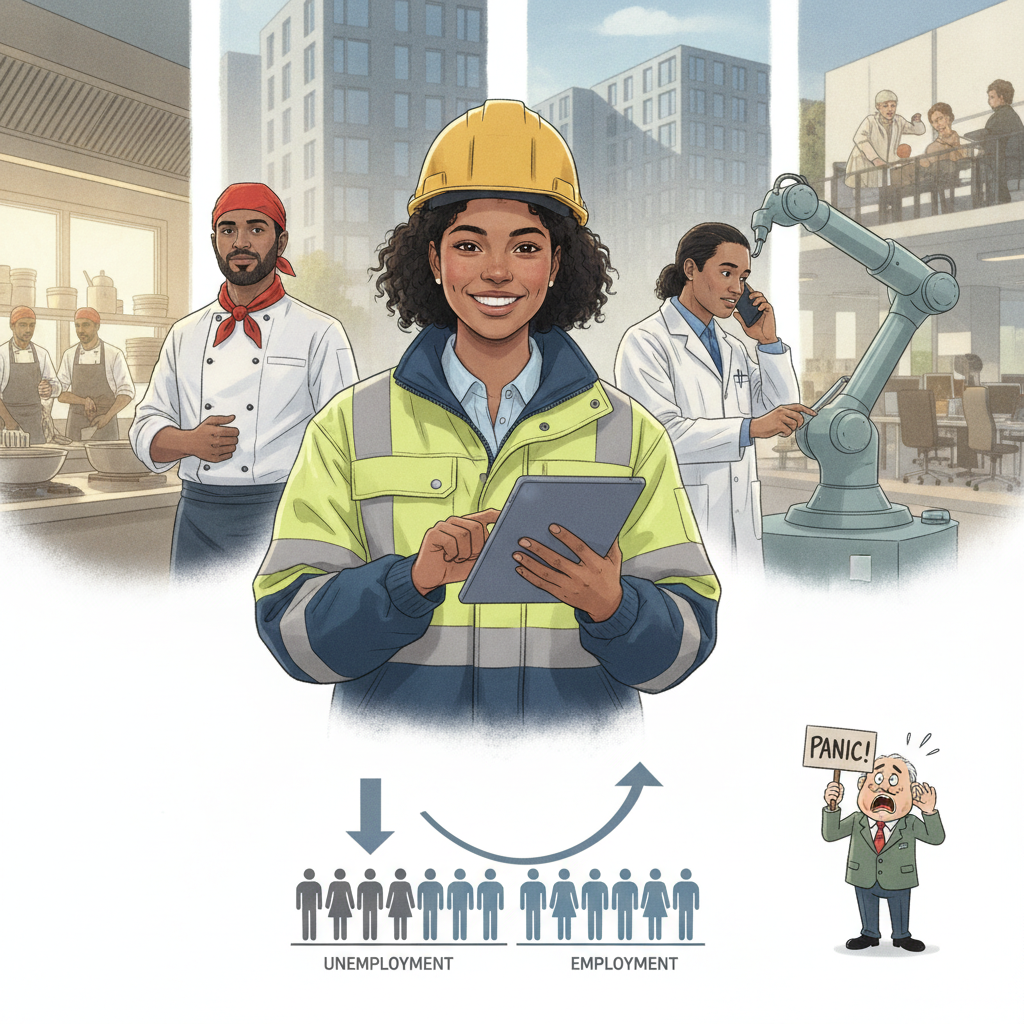
According to Arbetsförmedlingen, 349,000 people were registered as unemployed at the end of August, 6.5 percent of the workforce, down from 7.0 percent a year ago. That's roughly 22,000 fewer people in the queue. And here is the awkward part: about 18,000 of them are new Swedes. Old Swedes contributed 4,000.
Do the maths. More than four out of five steps of this recovery were taken by the people we are told, nightly, are the problem. If this were a group project, the new Swedes did the slides, the research and the presentation, and the old Swedes wrote their names on the front page.
None of this means the job is done. Unemployment among new Swedes is 13.4 percent, against 4.2 percent for old Swedes. That is a serious gap, and nobody should pretend otherwise. But the gap is shrinking, not growing.
Arbetsförmedlingen's explanation is refreshingly boring: it takes time to establish yourself, many jobs require education and experience, and the longer people have lived in Sweden, the better their chances. In other words, integration is not a miracle or a failure. It is a process, and it is slow, like everything else in Sweden, including getting a time at the vårdcentral.
The right-wing story needs the Swedish-Somali bus driver, the Swedish-Syrian nurse and the Swedish-Kashmiri seaman to stay invisible, because a working immigrant is a terrible campaign poster. The statistics keep ruining the script.
The real cloud on the horizon is not in Rinkeby or Rosengård. It is in the boardrooms: redundancy notices rose to just over 2,900 in August. When companies cut, they don't check who was born where. A downturn hits old and new Swedes alike, and that, not someone's birthplace, is what politicians should be losing sleep over.
So the next time someone says new Swedes are a burden on the labour market, hand them the August figures. Slowly. They may need time to establish themselves in reality.