
What happened
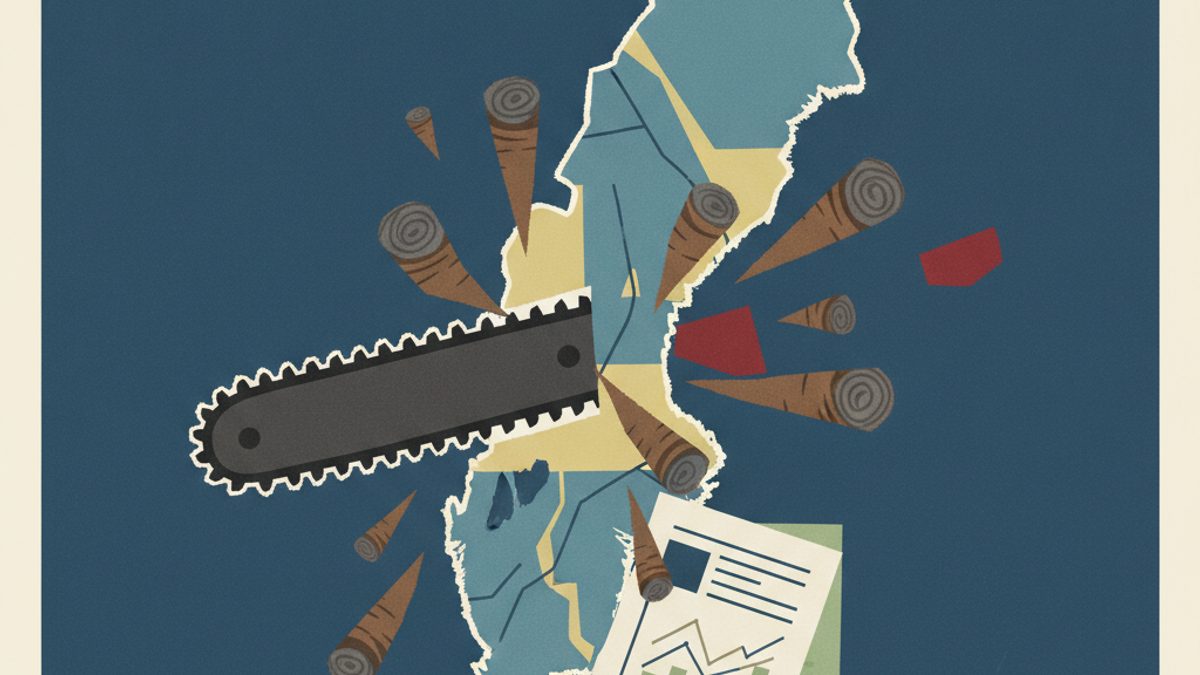
In the transitional budget for 2027, the government is reducing the appropriation for nature conservation to 776 million kronor. This is a reduction of one-third compared to the 2026 budget of 1.2 billion, and a halving compared to 2024. In addition, nearly 100 million kronor allocated to protect marine environments and lakes will disappear. The cut is taking place even though the main principle of a transitional budget is that the previous year's levels should remain fixed. Both county administrative boards and Naturskyddsföreningen are now warning that forests worthy of protection will be logged when the state can no longer acquire the land.
Our analysis
Swedish nature is often described by conservative and nationalist politicians as the very soul of the country. The forest and lakes are meant to unite us and be cared for as an inheritance. But when the same politicians hold the pen, it is precisely this shared nature that is sold out.
The main rule for a transitional budget is simple: no major political changes should be pushed through before a new government has taken office. Yet they choose to break this principle and cut a third of nature conservation. The losers are everyone living in Sweden, both new and old Swedes, who lose access to protected forests and living waters. The winners are commercial forestry companies and landowners who can now freely log trees that should have been preserved for future generations.
This once again shows the gap between rhetoric and reality. While politicians speak warmly about Swedish cultural heritage and nature, they dismantle the practical protection of what we all own together.
Explained
A transitional budget is presented by a caretaker government when a regular change of government is prolonged, and the basic rule is that it should only extend previous decisions without new political priorities.