
What happened
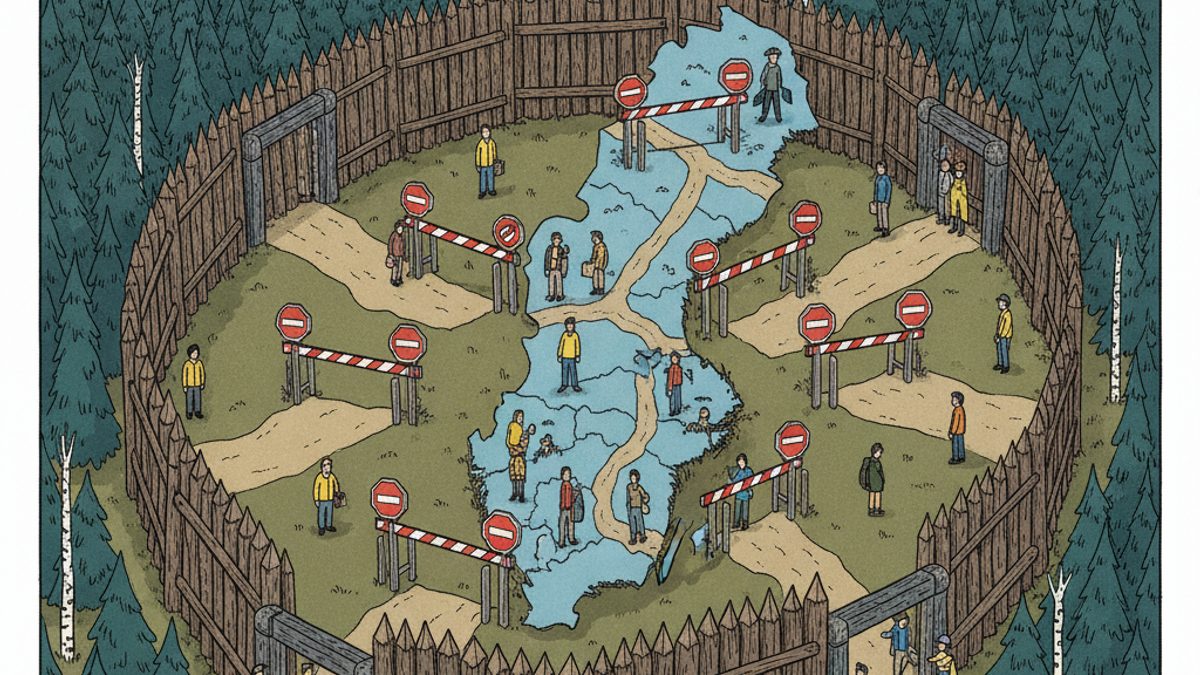
On October 1, a new reception act entered into force in Sweden. Under the law, asylum seekers and persons with removal orders are, as a general rule, not allowed to leave the county where their asylum accommodation is located without written permission from Migrationsverket. The authority may only grant permission if there are special reasons, such as court hearings, medical care, or the funeral of a close relative. Anyone traveling outside their designated area without permission can have their daily allowance completely revoked for one week for each day the absence continues. Both Institutet för mänskliga rättigheter and Advokatsamfundet rejected or criticized parts of the proposal during the consultation round because it imposes too general a restriction on people's freedom of movement.
Our analysis
When the state confines asylum seekers behind county borders, it is not about law and order. It is about severing contact between people. It is much easier to pursue a harsh migration policy against new Swedes if old Swedes never meet them in their daily lives, on the bus, or around the coffee table.
The government often claims that it wants to combat parallel societies. Here, the state itself creates one using the law book as a tool. People who are not suspected of any crime are subjected to travel restrictions that are otherwise only used in cases of serious security threats or criminal suspicions. The punishment for visiting a relative on the other side of an invisible border is that the state withdraws money for food.
The question is not only what this entails in terms of an administrative burden for Migrationsverket. The question is what it costs society as a whole when we normalize making people's freedom conditional on where they were born. When freedom of movement is taken away from the most vulnerable, the principle has already been weakened for everyone.
Explained
The Reception Act governs the rules regarding housing, compensation, and conditions for people seeking asylum in Sweden. Daily allowance is the state grant of a few tens of kronor per day meant to cover food, clothing, and hygiene products during the waiting period.