
What happened
Magnus Lindberg, head of collective bargaining at GS-facket, demands that the reduction of working hours should also cover employees at small businesses. The demand is made in the newspaper Arbetet as a response to the industry organizations Gröna Arbetsgivare, Grafiska Företagen, and Trä- och Möbelföretagen. The employer organizations argue that smaller companies are hit harder by shortened working hours and warn that the demands could lead to more bankruptcies. GS-facket points out that Sweden has the longest working hours in the Nordic region and emphasizes that Svenskt Näringsliv themselves already have shorter working hours for their white-collar staff.
Our analysis
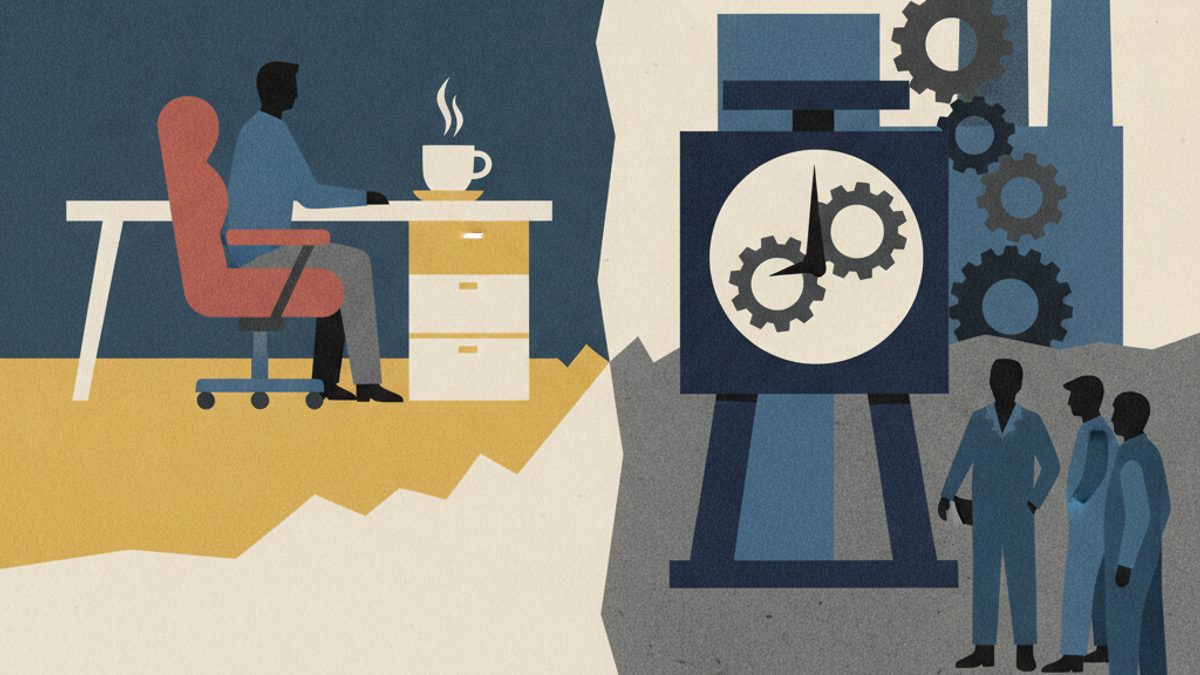
The debate on working hours exposes a clear double standard. When white-collar workers and administrators at Svenskt Näringsliv's own offices work shorter weeks, it is seen as modern HR policy. When new Swedes and old Swedes who saw timber, print paper, or pick crops demand the same thing, the executives sound the alarm about economic ruin.
The employers claim that small businesses cannot cope with the change and that workers must hold back demands to save the companies. In practice, they are asking staff to pay for crises with their own bodies and their health. A company that only survives by forcing its employees to work longer than in the rest of the Nordic region has no sustainable recipe for the future.
Many new Swedes uphold the very manual industries where wear and tear is greatest. Denying them more time for recovery and family is not about corporate margins. It is about power and about whose time is considered valuable.
Explained
Reduction of working hours means that standard working hours are reduced while maintaining full pay. The issue is usually settled in negotiations between trade unions and employers in collective agreements.