
What happened
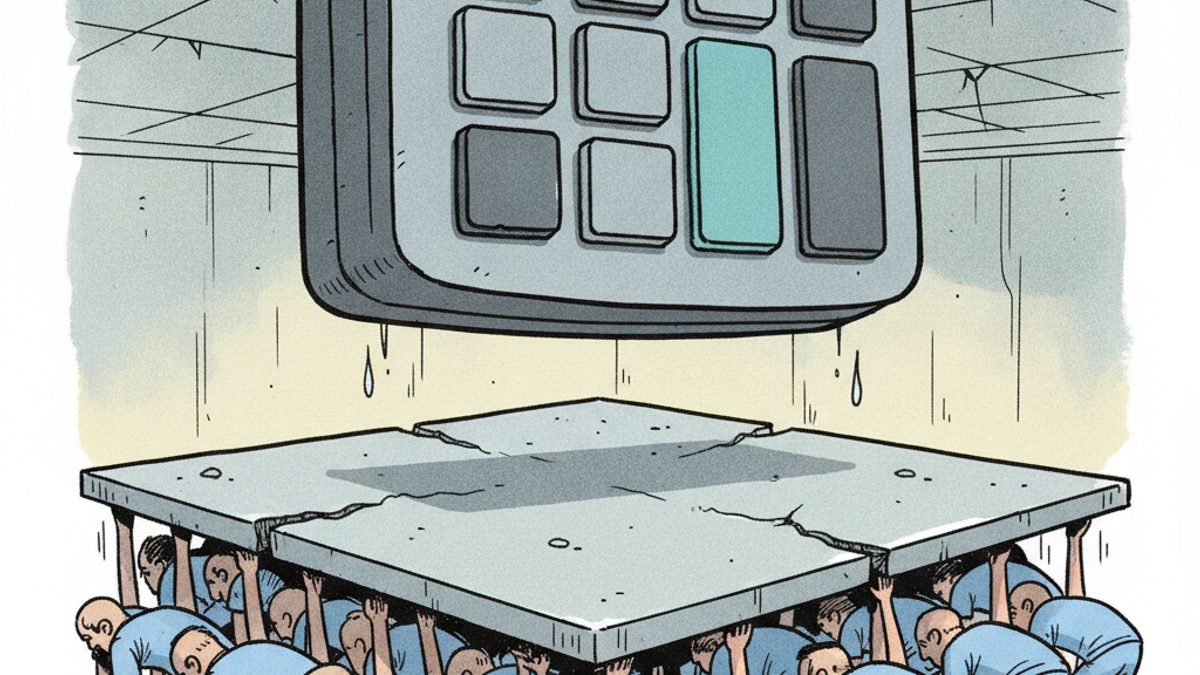
Business economist Louise Bringselius writes in DN Debatt that Swedish welfare has capsized due to excessive financial management. She argues that teachers, doctors, and social workers are forced to act as gatekeepers to maintain budgets instead of attending to people's actual needs. According to Bringselius, the pursuit of short-term savings in schools and healthcare leads to increased costs down the line in the form of social exclusion and ill health. She demands that public sector leadership be transformed so that human dignity and quality carry more weight than mere budget targets.
Our analysis
Bringselius puts her finger on a management model that has turned care into a spreadsheet. But she omits who pays the highest price when welfare is cut back. New Swedes are hit twice: they more often live in areas where schools and health centers are drained of resources, while also forming the backbone among the assistant nurses and care aides who are forced to run faster with every austerity demand.
In the political debate, new Swedes are constantly portrayed as a cost to society. It is a convenient lie that turns reality on its head. Without new Swedes, elderly care, dental clinics, and emergency rooms would grind to a halt tomorrow. The question is not what new Swedes cost welfare, but how much the system profits from underpaying and overburdening those who keep it alive.
When the budget is always prioritized over people, politicians also gain a perfect scapegoat. Instead of taking responsibility for years of underfunding, welfare shortcomings are blamed on migration. In this way, economism is used as a political weapon: first those in power starve welfare, then they blame new Swedes because it is not enough.
Explained
Economism means that economic factors and narrow budget targets are made the primary benchmark for all operations, including schools and healthcare where care and quality should be central.